Boots Off, Calm On: A Compact Wet-Weather Zone That Works in Any Hall
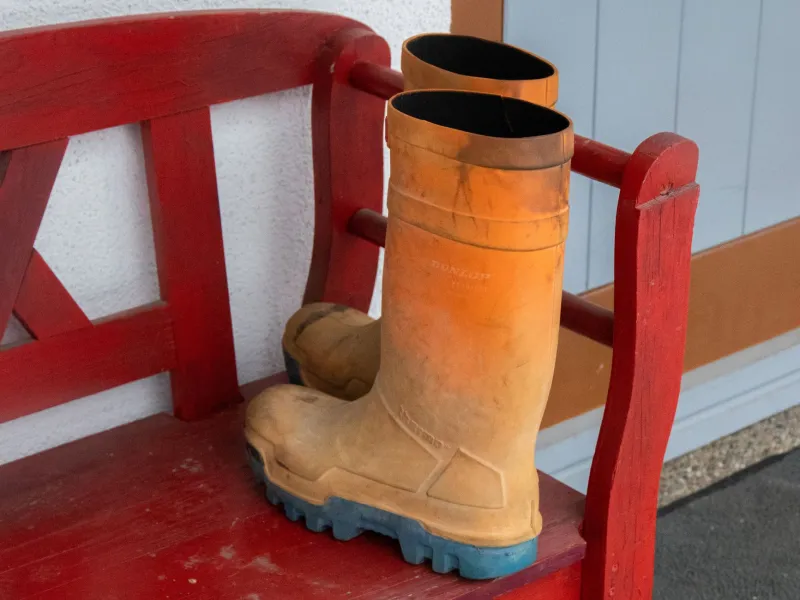
There’s a particular kind of November morning in the UK. The sky is a flat grey, the pavement has that slick shine, and everyone leaves the house in a hurry — only to return with boots that look like they’ve been on a sponsored walk through a field. The hallway takes the hit first. Then the mud travels: a smear by the coat hooks, a few leaves near the stairs, a damp patch where someone kicked off a welly and missed.
The good news is that you don’t need a boot room, a utility extension or a landlord’s permission to fix this. You need a landing strip: a small, defined wet-weather zone by the front door that catches the mess before it gets ideas. Think of it less as a makeover and more as a traffic-management plan for shoes.
Start with the floor, not the furniture
Before you buy a rack or a basket, look at what your hallway floor is actually like. Victorian terraces often have original tiles; newer rentals might have laminate or a short-pile carpet that shows every drop of water. The aim is to create a waterproof layer that can be lifted, shaken and wiped without drama.
A shallow, rigid tray is the workhorse here. Not a flimsy plastic lid, and not a decorative wicker basket that will quietly absorb half the puddles. A proper boot tray with a lip — the sort sold for porches and garden rooms — gives wet shoes somewhere to drip. If space is tight, look for a narrow tray that fits the width of the door swing, or a two-part tray that can be separated when the hall feels cramped.
Under the tray, or beside it, add an absorbent mat. A microfibre or coir mat is fine, but choose one that can go outside and be shaken. The mat’s job is to catch the first wave: the gritty bits, the leaf fragments, the general dampness from the sole. The tray’s job is to hold the actual drips. Together they stop the floor from becoming a mud map.
If you rent, avoid anything that needs drilling. A freestanding boot rack or a slim shoe bench with a wipe-clean top can sit on the tray or next to it. Command strips are useful for lightweight hooks, but don’t trust them with a soggy winter coat. Keep the heavy stuff on the floor or on a proper freestanding frame.
Give wet boots a clear waiting room
The mistake most hallways make is trying to store every pair of shoes at once. In November, that means three pairs of trainers, two sets of school shoes, a pair of wellies, the dog-walking boots and the “good” shoes that never quite make it upstairs. The result is a pile that never dries properly and a hallway that smells faintly of wet rubber.
A simple daily limit helps. Decide how many pairs can be in the wet-weather zone at any one time — two is realistic for many households, three if you have children and a dog. Everything else lives elsewhere: on a bedroom rack, in a cupboard, or in a shed if it’s genuinely outdoor kit.
Then use a one-in-one-out rule for drying. When a new wet pair comes in, the oldest pair moves on. If the oldest pair is dry, it goes to its proper home. If it’s still damp, it moves to a second spot — perhaps a folding rack near a radiator, or a ventilated cupboard — so the front-door tray stays for the current rotation. This sounds fussy, but it’s the difference between a hallway that works and a hallway that becomes a shoe swamp by Wednesday.
A simple boot rack with two or three rungs is enough. Turn boots upside down if the rack allows, or lean them so the water runs away from the sole. Don’t shove wet shoes into a closed cupboard; they’ll stay damp and take on that unmistakable smell. Airflow is the goal, not concealment.
The five-minute evening reset
The system only holds if someone resets it. The good news is that it’s a five-minute job, and it’s far easier than a weekend deep-clean.
At the end of the day, once the household is in, do a quick sweep of the landing strip. Pick up any loose leaves or grit and put them in the bin or outside. Shake the mat outside the door — not over the hall floor, unless you enjoy sweeping twice. Wipe the tray with a damp cloth if there’s visible mud, and leave it to dry. Check the boot rack: is there a pair that has been sitting there for three days? Move it on. Is there a pair that needs to go upstairs? Take it now, while you’re thinking about it.
Then set out tomorrow’s shoes. If the school shoes are dry, put them by the door. If the wellies are needed, make sure they’re the pair in the zone. This one small act removes the morning scramble and stops the “where are my shoes?” chorus that makes everyone late.
If you have children, give them a job in the reset. A five-year-old can put their own shoes on the rack; a ten-year-old can shake the mat. It’s not about perfection. It’s about building a habit that keeps the hallway from becoming the household’s unofficial mud deposit.
Small halls, rentals and real life
Not every hallway has space for a bench, a rack and a tray. In a narrow rental, the landing strip might be no wider than the door. That’s fine. Use a vertical approach: a slim tray on the floor, a wall-mounted rack if you’re allowed, or a freestanding rack that tucks under a coat rail. Keep the coat hooks above the tray, not over the shoes, so drips don’t land on dry pairs.
If the front door opens directly into a living room, create a visual boundary with a small rug or a line of tape on the floor. It sounds a bit primary-school, but it gives everyone a clear message: this is where the wet stuff stops. In shared hallways or flats, keep the zone tight and tidy — neighbours notice a pile of muddy boots more than a neat tray.
Finally, accept that November is not the month for perfection. There will be days when the tray overflows and the mat is a disaster. The five-minute reset is there to bring it back, not to prevent every muddy footprint. A landing strip is a small act of kindness to your future self: a place where the weather can be dealt with before it follows you in.