Sill Space: A Winter Clear-Out for Every Windowsill
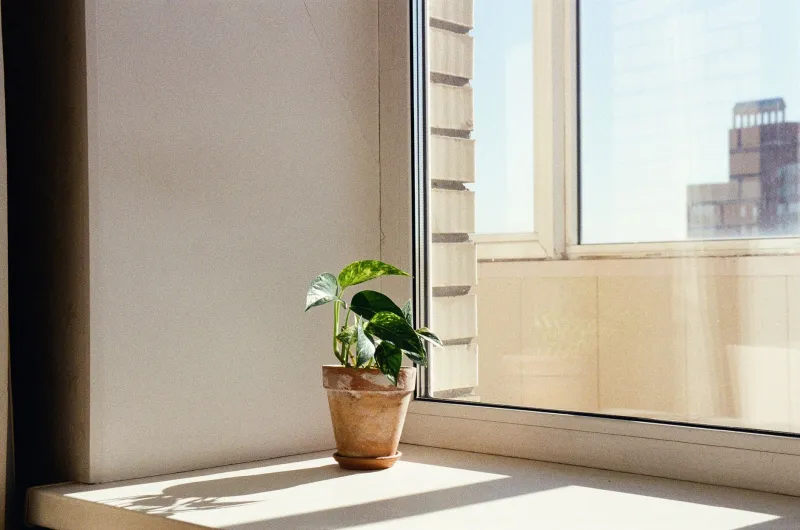
A windowsill is not really a shelf. It is a narrow strip of light, glass and moving air, and in a British winter it is also the first place condensation shows up. Yet somehow it becomes the landing pad for plant pots, vitamin bottles, candles, spare keys and whatever else needs a home for five minutes. By November, many sills are so full that the curtain cannot hang straight and the glass never quite dries.
The fix is not a ruthless minimalism session. It is a sensible edit: decide what the sill is for, move what belongs elsewhere, and build a tiny evening habit that stops the pile returning.
Why winter changes the rules
Cold glass plus a warm room equals condensation. That is normal, but clutter makes it worse. Objects pressed against the glass block airflow, trap moisture and hide the telltale signs of damp. Heavy curtains drawn over crowded sills stay damp at the hem, which is exactly what you do not want in a room you are trying to keep dry.
A clear-ish sill dries faster. A drier sill means fewer black spots on sealant, less fogged-up glass and curtains that do not smell fusty by February. It also makes the room feel calmer, which is a decent bonus for ten minutes of work.
The three-question sill test
Before you move a single item, use a simple filter. Ask:
- Does this need daylight, or can it live in a cupboard?
- Is it used here every day, or is it just parked here?
- Will it cope with a damp, cold windowsill without being damaged?
If the answer is no, it does not belong on the sill. That is the whole rule. No complicated storage system required.
Start with one window, not the whole house
Pick the worst sill in the house — usually the kitchen or bathroom — and clear it completely. Put everything in a washing-up bowl or on a tea towel. Wipe the glass, dry the frame and clean the sill properly. Then sort into three piles: keep, relocate and donate or recycle.
Keep should be a very short list: one plant that actually suits the light, one object you use daily, maybe a small dish for a ring or keys if that is genuinely where you take them off. Relocate means vitamin bottles to the cupboard where you make breakfast, candles to a drawer away from direct sun, spare plant pots to the shed or a cupboard. Donate or recycle covers duplicate vases, unused candle holders, mystery plastic fittings and anything broken.
The aim is not an empty sill. It is a sill that can breathe.
Room-by-room: what usually needs to move
Kitchen
Kitchen sills collect herbs, oil bottles, washing-up liquid and random tea lights. Steam and heat make them a bad home for anything that needs dry storage. Keep one hardy herb if it thrives there, move oils to a cupboard and put washing-up liquid under the sink. Wipe the sill dry each evening.
Bathroom
This is the condensation hotspot. Toiletries, spare bottles and bath toys do not need to sit against wet glass. Move bottles into a cabinet or caddy, keep just the soap or one everyday item on the sill, and dry the ledge after showers. If the window has a trickle vent, keep it open rather than blocked by bottles.
Bedroom
Bedroom sills often hold water glasses, vitamin bottles, books and hair bobbles. Keep one glass and perhaps one book if you genuinely read there. Move supplements to a drawer or cupboard, put hair accessories in a small bowl elsewhere and return cups to the kitchen each morning.
Living room
Candles and ornaments multiply here. Try rotating two or three favourites rather than displaying the whole collection at once. Store the rest in a cupboard, not on the floor beside the sofa. If a candle is only for special occasions, it does not need to sit on the sill all winter.
Home office or box room
Paper, pens and stray cables creep onto any flat surface. Keep a single pen pot if it is used daily, move cables to a labelled box and put paper in a tray or file. A clear sill gives you better light and one less thing to dust.
Give relocated items a proper home
The mistake most of us make is moving a pile from the sill to the kitchen table. That is not organising; it is just postponing the decision. As you relocate, give each item a destination. Vitamin bottles go with breakfast things. Candles go in a drawer. Spare pots go in the shed. Donation items go straight into a bag by the door, ready for the next charity shop run.
If something has no obvious home, ask whether you need it at all. A windowsill is a bad storage unit, but it is an excellent reminder that not everything deserves shelf space.
The five-minute evening reset
This is the habit that keeps the job done. After tea, or just before you settle down for the evening, do a quick sill sweep:
- Take away cups, glasses and stray post.
- Wipe any condensation from the glass with a microfibre cloth, then wring the cloth out.
- Pull curtains away from the sill and radiator so air can move.
- Open the window a crack for a few minutes if it is safe and the room is not too cold, or use the trickle vent.
- Leave the sill as clear as you reasonably can overnight.
In the morning, open the curtains properly and dry any remaining moisture. It takes less time than scrolling your phone and it stops the sill becoming a damp little shelf again.
A calmer sill, a drier curtain, a better morning
You do not need to empty every windowsill in the house today. Start with the one that catches the most condensation, follow the keep-relocate-donate rule and repeat the five-minute reset for a week. The difference is surprisingly visible: clearer glass, drier curtains and a small surface that no longer asks for your attention every time you walk past.
Clear space, calm mind — even if it is only a windowsill.