Mystery Plugs, Clear Drawer: A Low-Drama Sort for Spare Cables
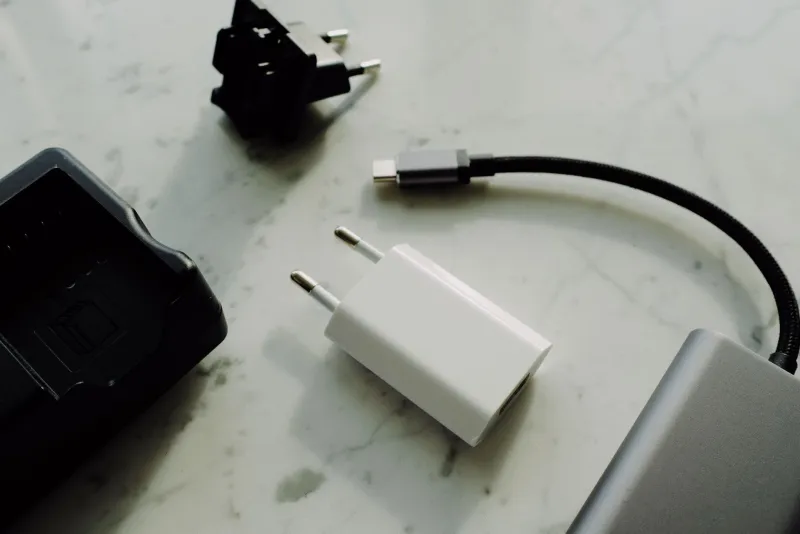
Every home has one. It might be the kitchen drawer beside the fridge, the plastic tub under the bed, or the shoe box on top of the wardrobe. Open it and you are met with a snake pit of charging cables, wall plugs with no obvious owner, and at least one adapter that looks like it belongs to a laptop from another era. The charger drawer is not a moral failing. It is simply where uncertainty goes to live.
The good news is that you do not need a label maker, a dedicated cable organiser, or a new set of matching storage boxes. You need a towel, a marker, some tape and about half an hour. This is an editing job, not a shopping job.
Why the drawer fills up
Cables arrive with devices and then outlive them. A phone goes to the great recycling centre in the sky, but its charger stays behind, just in case. A hotel room, a conference goody bag or a forgotten drawer at work adds another. Because cables are small, they are easy to ignore. Because they might be useful, they are hard to bin. The result is a drawer that feels busy but delivers very little.
The aim here is not to create a perfect cable library. It is to make the drawer honest. If you can find the cable you need in under ten seconds, the system is working. If you cannot, it is just a tangle with a lid.
Start with a no-guilt clear-out
Clear a table or spread a towel on the floor. Tip the whole drawer out. Yes, all of it. You cannot sort what you cannot see, and half-hearted rummaging just moves the problem around.
Set a timer for twenty minutes. Make three piles:
- Keep for now: cables you recognise and use regularly.
- Test me: mystery cables that look undamaged and might still have a job.
- Let go: cracked, frayed, melted, or obviously obsolete items. This includes any cable with exposed wires or a plug that wobbles.
Do not stop to coil anything neatly yet. Neatness comes later; decisions come first. If you feel a pang of guilt about a cable that came with a beloved old phone, acknowledge it and move on. The cable is not the memory.
The simple test-and-label method
For the 'test me' pile, work one cable at a time. Plug the cable into a known working charger or USB port, then connect it to a device you can afford to test. A phone, a power bank or a Bluetooth speaker is ideal. If the device charges, the cable stays. If it does not, and you have tried another socket, let it go.
Be sensible about safety. Do not force a connector into a port. Do not test a cable with damaged insulation, a bent plug or a smell of burning. If it looks tired, recycle it rather than risk it. And if you have a drawer full of unknown barrel connectors for old routers and forgotten toys, be honest: if the device is gone, the cable can go too.
Label as you test. A strip of masking tape and a marker is enough. Write the device it belongs to, not just the connector type. 'Work laptop' is more useful than 'USB-C'. 'Emma's camera' beats 'small plug'. If a cable is a spare for a device you use daily, label it 'spare phone' and keep one. One spare is sensible. Four is a drawer filler.
Store less, not better
Once you know what you are keeping, coil each cable loosely and secure it with a Velcro tie, an elastic band or a reusable clip. Avoid tight bends around the connector. Put the labelled cables in a small clear tub, a zip-up pouch or a drawer insert you already own. The point is not to buy a beautiful cable management system. The point is to see what you have.
Keep the everyday cables where you use them: one by the bed, one at the desk, one in the travel bag. The rest can live in the main stash. If you have a cable that only works with one device in one room, store it with that device instead.
Responsible exits for the leftovers
Working cables and chargers that no longer serve you can still be useful to someone else. Offer them to neighbours, put them on a local Freecycle or Buy Nothing group, or ask a nearby charity shop whether it accepts electrical accessories. Call ahead: not every shop can take them, and it is kinder than leaving a bag on the doorstep.
For anything broken, recycle it properly. In the UK, small electrical items and cables can be taken to a local household waste recycling centre. Many councils run kerbside collections for small electricals, and retailers such as Currys offer in-store recycling for old electrical items. Look for WEEE recycling points, which are designed for exactly this kind of waste. Do not put cables in the general rubbish if you can avoid it; the copper and plastic are worth recovering.
How to stop the drawer refilling
The drawer will only stay clear if new cables have a rule to follow. Try these:
- One in, one out. When a new cable arrives, an old one leaves.
- Label on arrival. Put the device name on the cable the day it comes into the house.
- No mystery guests. If you cannot identify a cable within a week, it does not get drawer privileges.
- A monthly ten-minute check. Coil, label, and remove anything that has stopped working.
- Keep the container small. A small box forces editing. A giant tub invites clutter.
None of this requires spending money. It requires a decision, a marker and a willingness to let go of 'just in case'. The reward is a drawer that opens without a fight, and a small, quiet win every time you need to charge something.
At The Organizer UK, we are fond of systems that make life calmer rather than more complicated. The charger drawer is a good place to start. Clear it once, label what stays, and let the rest go to a better use.